
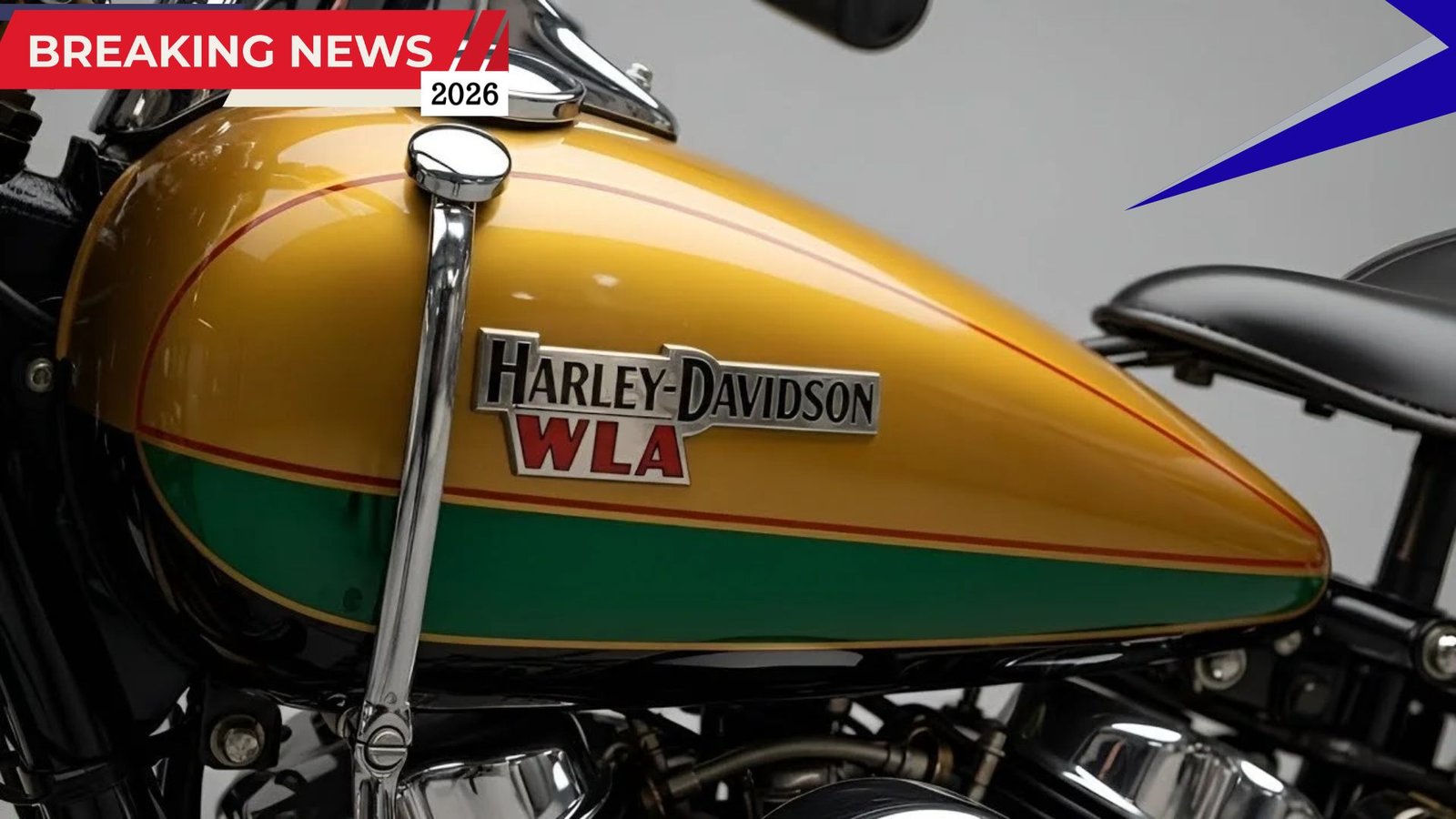
The 2026 Harley-Davidson WLA is gaining attention as a potential modern reinterpretation of one of the most iconic motorcycles in the brand’s history. Originally developed in the 1940s for military use, the WLA became widely known for its rugged reliability and historic significance. The upcoming model is expected to combine that legendary character with modern engineering and comfort-focused features.
Although complete official confirmation from Harley-Davidson is still awaited, the 2026 version is widely discussed as a heritage-inspired motorcycle designed for riders who appreciate classic styling along with contemporary performance and safety updates.
Retro Styling Inspired by Military Heritage
The 2026 Harley-Davidson WLA is expected to maintain the distinctive vintage appeal that made the original motorcycle famous. Designers may adopt a rugged and minimalist approach, featuring matte or olive-green paint schemes that reflect its military roots.
Classic elements such as a round headlamp, wire-spoke wheels, and exposed mechanical components are likely to remain part of the overall design. The motorcycle’s silhouette is expected to feel solid and purposeful, staying true to the character of the earlier WLA model.
At the same time, subtle modern touches could be introduced. LED lighting integrated into traditional housings and a compact digital-analog instrument cluster may improve usability while preserving the retro appearance. Improved seat cushioning is also anticipated to enhance long-distance comfort for riders.
Modern V-Twin Engine for Smooth Performance
Performance improvements are a key expectation for the 2026 Harley-Davidson WLA. While the original motorcycle used a flathead V-twin engine built mainly for durability, the modern version is likely to feature an updated V-twin powertrain that meets current emission standards.
This engine is expected to focus on delivering smooth acceleration and strong low-end torque. Such characteristics would make the motorcycle suitable for relaxed cruising in urban environments as well as comfortable highway rides. A modern fuel-injection system could replace the older carburetor setup, ensuring better fuel efficiency and reliable starting in different weather conditions.
These upgrades would help maintain the spirit of the original while adapting the motorcycle to modern performance expectations.
Expected Performance and Mechanical Highlights
| Feature Area | Details in 2026 Harley-Davidson WLA |
|---|---|
| Engine Type | Modern V-twin engine |
| Power Delivery | Smooth acceleration with strong low-end torque |
| Fuel System | Advanced fuel injection technology |
| Riding Purpose | Comfortable city and highway cruising |
| Emission Compliance | Meets current environmental standards |
This performance-focused approach aims to provide a balanced riding experience for modern users.
Improved Ride Quality and Handling
The 2026 Harley-Davidson WLA is expected to deliver a significantly improved ride compared to its historic predecessor. A strengthened frame structure may provide better stability, while modern suspension components could enhance comfort on uneven roads.
Telescopic front forks and twin rear shock absorbers are likely to be tuned for long-distance riding. Wider tires could contribute to improved road grip and handling performance. These mechanical enhancements are designed to make the motorcycle easier to control for both new and experienced riders.
Braking performance is also expected to see major advancements. Disc brakes on both wheels and optional anti-lock braking systems may be included to improve safety and stopping efficiency.
Essential Technology and Safety Updates
Despite its retro appearance, the 2026 Harley-Davidson WLA is likely to include essential modern safety and convenience features. Technologies such as traction control and basic ride-assist systems may help improve rider confidence in different conditions.
Other expected additions include a USB charging port and limited smartphone connectivity options. These features are likely to be integrated discreetly so that they do not disrupt the motorcycle’s classic aesthetic.
By combining heritage styling with modern safety technologies, Harley-Davidson may aim to attract both traditional enthusiasts and new riders.
Key Safety and Technology Features Overview
| Feature | Function |
|---|---|
| ABS Braking System | Prevents wheel lock during sudden braking |
| Traction Control | Improves grip on slippery surfaces |
| Ride Assist System | Supports stable riding performance |
| USB Charging Port | Allows device charging during travel |
| Hybrid Instrument Cluster | Combines analog look with digital data |
These features highlight how vintage-inspired motorcycles can adapt to contemporary riding expectations.
Premium Positioning and Limited Availability
If introduced to the market, the 2026 Harley-Davidson WLA is expected to be positioned as a premium heritage motorcycle. Pricing may be higher than standard cruiser models due to its historical significance, specialized design, and potentially limited production numbers.
Availability may vary by region, and the motorcycle could appeal strongly to collectors and brand loyalists. Limited production runs often increase exclusivity, making such models desirable among enthusiasts who value rarity and authenticity.
Ideal Buyers for the Heritage Motorcycle
The 2026 Harley-Davidson WLA would likely attract riders who appreciate vintage motorcycles but want modern reliability and comfort. History enthusiasts, collectors, and relaxed cruising riders may find the model especially appealing.
Its design and riding characteristics are expected to focus on emotional connection and heritage rather than aggressive speed performance. This makes it suitable for leisurely rides, weekend journeys, and showcasing classic motorcycling culture.
Conclusion: A Heritage-Inspired Motorcycle for Modern Riders
The expected reveal of the 2026 Harley-Davidson WLA highlights a growing trend in the motorcycle industry — blending historic design with modern engineering. By combining retro styling, improved performance, and essential safety features, the motorcycle could offer a unique riding experience that respects its legacy.
This development matters because it shows how manufacturers continue to revive iconic models for new generations of riders. Moving forward, heritage motorcycles like the WLA may play an important role in connecting classic motorcycling traditions with contemporary expectations for comfort, efficiency, and safety.