
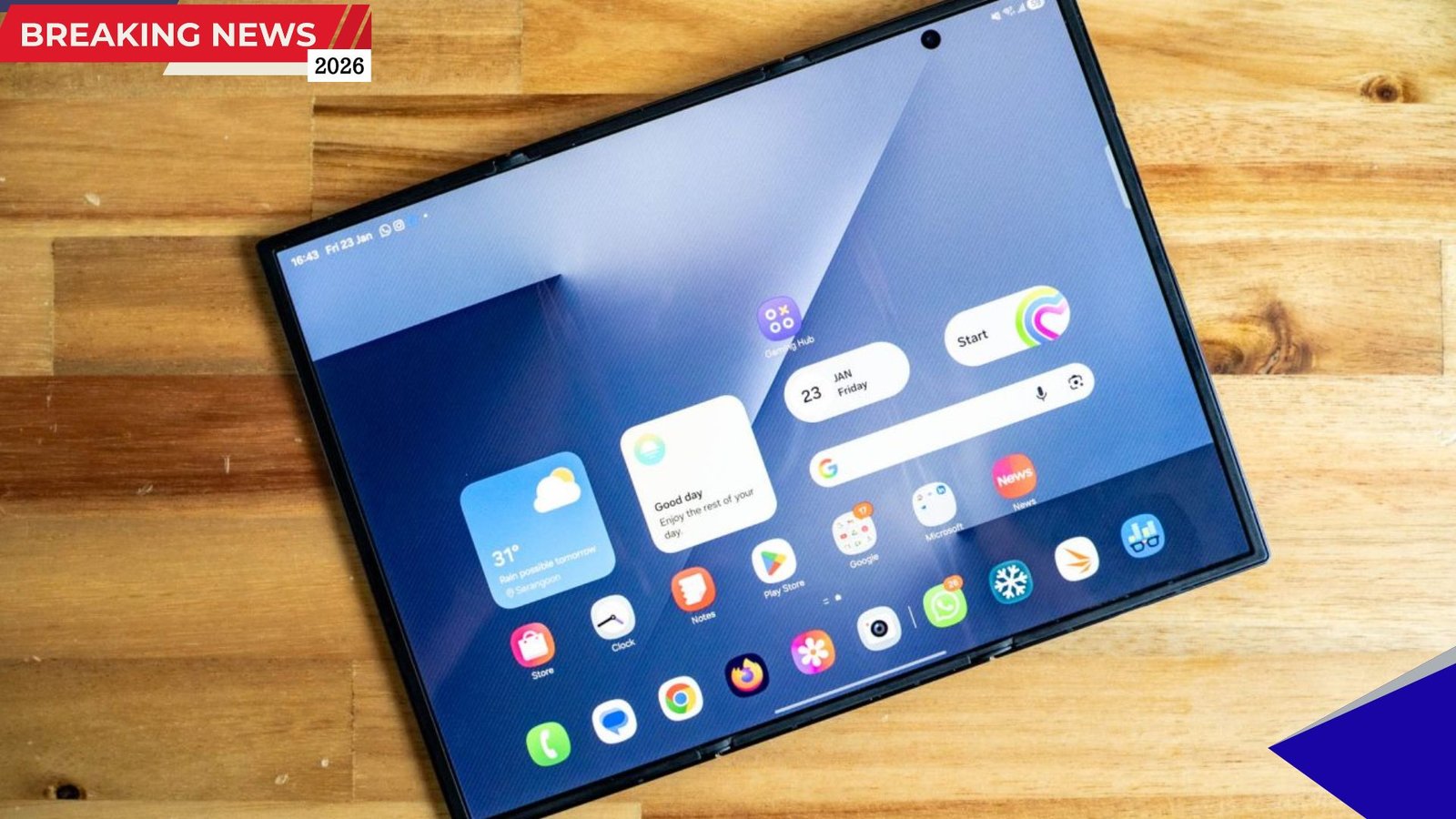
The Samsung Galaxy Z TriFold introduces a new direction in foldable smartphone design by featuring a screen that folds twice. This innovative structure transforms the device into a mini tablet when fully unfolded, offering significantly more screen space compared to traditional foldable phones.
With a large main display, flagship performance hardware, and strong battery life, the TriFold aims to push the boundaries of what foldable smartphones can offer. However, its high price, bulky folded form, and limited availability mean that the device is primarily targeted at early adopters and technology enthusiasts.
Triple Folding Design Brings Larger Viewing Area
The defining feature of the Samsung Galaxy Z TriFold is its unique dual-hinge folding mechanism. When fully opened, the device reveals a 10-inch display that is wider than the screen on standard book-style foldables. This larger panel, combined with a 4:3 aspect ratio, improves content viewing by reducing black bars and preventing videos from feeling compressed.
The added screen width enhances media consumption, reading, and multitasking. Users can comfortably watch videos, browse the web, or interact with apps on a display that feels closer to a compact tablet than a smartphone.
Despite its thin panels, the device may feel slightly unbalanced when held in one hand. This is due to differences in panel thickness and the weight of the camera module. Users may need some time to adjust to the handling dynamics when using the phone in tablet mode.
Bulky Folded Form and Folding Limitations
While the unfolded experience is praised, the Samsung Galaxy Z TriFold feels noticeably thick when folded. Measuring around 12.9mm in its closed state, the device can feel bulky compared to modern flagship smartphones.
Another limitation is that the phone cannot be partially folded to act as a stand. Unlike some foldable devices that support flexible positioning modes, the TriFold requires full opening or closing. This makes activities such as watching videos or reading on a table slightly less convenient.
The folding mechanism also includes a vibration alert system that notifies users if they attempt to fold the device incorrectly. The section with the camera module must be folded last, while the left panel is folded first to ensure proper alignment.
Samsung Galaxy Z TriFold Display Specifications
| Feature | Specification |
|---|---|
| Main Display | 10-inch Dynamic AMOLED 2X |
| Resolution | 2,160 x 1,584 pixels |
| Refresh Rate | 1Hz to 120Hz |
| Outer Display | 6.5-inch Dynamic AMOLED 2X |
Software Features and Multitasking Capabilities
The Samsung Galaxy Z TriFold offers a software experience similar to other premium foldable devices in Samsung’s lineup. AI-powered tools allow users to rewrite text, perform live translation, and remove unwanted objects from photos.
One notable setting involves app continuity between screens. Users must manually enable the option that keeps apps open when switching between folded and unfolded modes. Without this setting activated, the transition experience may feel less seamless.
The phone also includes Samsung DeX support, enabling a desktop-like interface for productivity tasks. Although this feature adds versatility, its usefulness depends on individual work preferences and usage habits.
Camera System Mirrors Fold Series Performance
Camera performance on the Samsung Galaxy Z TriFold is comparable to Samsung’s existing foldable flagship models. The device features a 200MP main camera, a 10MP telephoto lens capable of up to 3x optical zoom, and a 12MP ultra-wide sensor.
Two 10MP selfie cameras are included — one on the inner display and another on the outer screen. This setup provides flexibility for photography and video calls regardless of how the device is positioned.
Image quality is generally reliable, delivering clear photos in standard shooting conditions. The camera hardware does not introduce major new capabilities but maintains consistency with Samsung’s premium foldable photography performance.
Samsung Galaxy Z TriFold Camera Overview
| Camera Type | Specification |
|---|---|
| Main Camera | 200MP |
| Telephoto | 10MP with 3x optical zoom |
| Ultra-Wide | 12MP |
| Selfie Cameras | Dual 10MP |
Performance Benefits in Tablet Mode
The Samsung Galaxy Z TriFold is powered by the Qualcomm Snapdragon 8 Elite processor, paired with up to 16GB RAM and storage options reaching 1TB. Performance is described as strong across everyday tasks and gaming scenarios.
Interestingly, benchmark results indicate slightly better performance when the phone is fully unfolded. Scores show improved processing stability and higher performance figures in tablet mode compared to the folded state.
Gaming on the large display is particularly enjoyable due to the expanded viewing area. Holding the device with both hands helps offset handling challenges while providing a more immersive experience.
Battery Life Supports Full-Day Usage
Battery performance is another notable aspect of the Samsung Galaxy Z TriFold. The device can last a full day with approximately 40 percent battery remaining when used primarily in the unfolded mode.
Testing suggests around 9 hours and 55 minutes of usage when open, while folded usage can extend battery life significantly to over 17 hours. This variation highlights how screen size and usage patterns influence overall endurance.
Samsung Galaxy Z TriFold Battery Details
| Usage Mode | Battery Result |
|---|---|
| Unfolded | Around 9 hours 55 minutes |
| Folded | Around 17 hours 14 minutes |
Pricing and Availability Challenges
The Samsung Galaxy Z TriFold is priced at approximately S$3,998 for the 512GB variant, placing it firmly in the ultra-premium segment. The high cost reflects early adopter pricing associated with new form-factor innovations.
Availability also appears limited, with reports suggesting that the device may only be sold to selected interested customers. In some cases, units may be available through resellers at higher prices, further emphasizing its exclusivity.
Conclusion
The Samsung Galaxy Z TriFold represents an ambitious step forward in foldable smartphone design, delivering a tablet-like viewing experience through its triple-folding display. Its large screen enhances media consumption, gaming, and multitasking, while strong performance and reliable battery life support daily usage.
However, the bulky folded form, lack of partial folding functionality, and extremely high price make the device less practical for mainstream buyers. For readers and technology enthusiasts, the key takeaway is that the TriFold showcases the future potential of foldable devices while highlighting the trade-offs that come with early-stage innovation.