
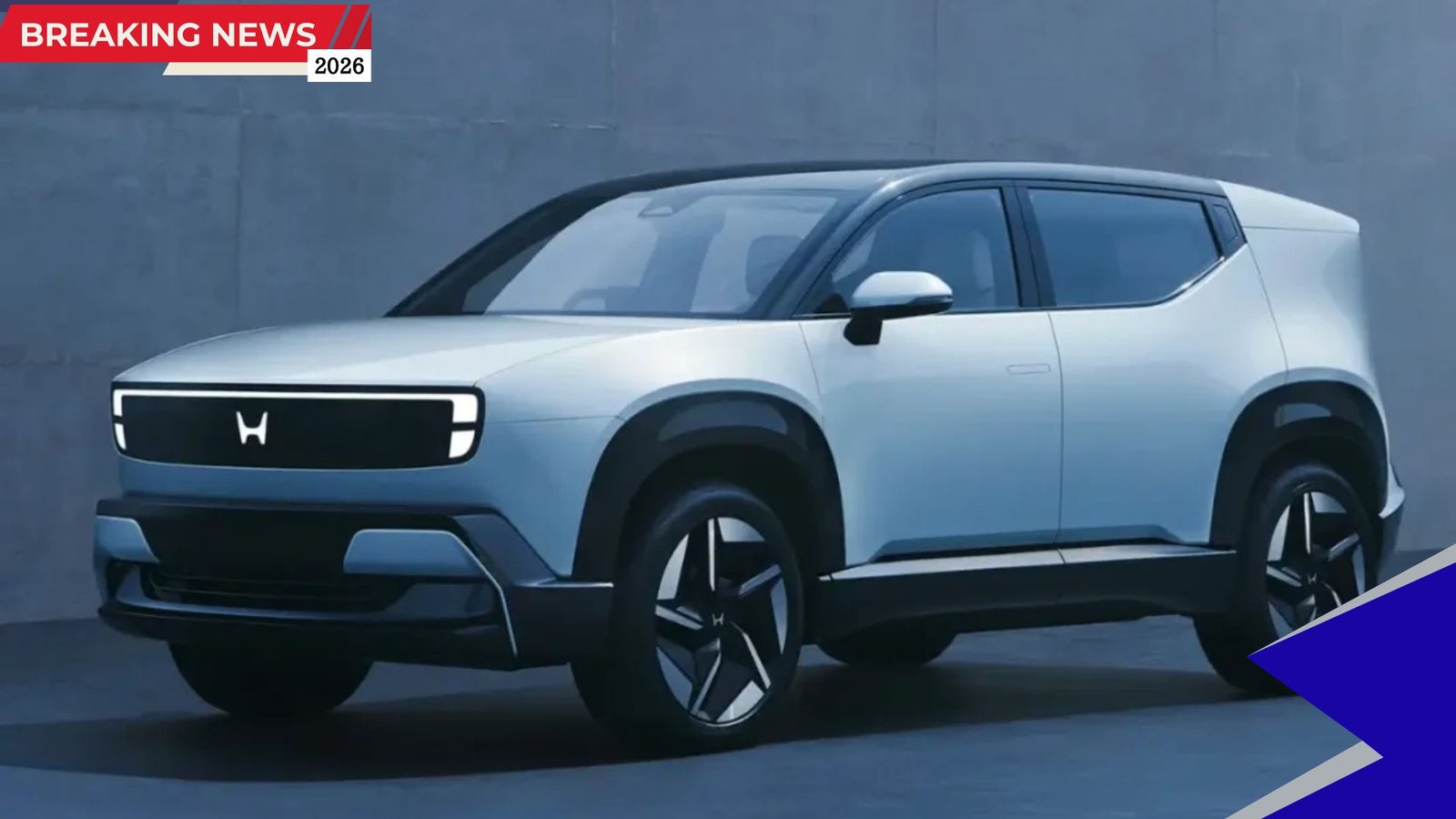
Honda Motor Co., Ltd. has announced the cancellation of development and launch plans for three upcoming electric vehicles intended for the North American market. The affected models include the Acura RSX electric version and the Honda 0 Saloon and SUV. This decision reflects the company’s reassessment of its electrification strategy in response to changing market conditions, financial pressures, and evolving customer demand.
The move signals a significant shift in Honda’s near-term plans for electric mobility. While the company continues to view electric vehicles as an important part of its future, it is currently prioritising financial stability and market responsiveness.
Financial Impact and Estimated Losses
Honda has outlined a substantial range of operating expenses linked to this decision. The company expects operating costs related to the cancelled projects to be between 820 billion yen and 1.12 trillion yen. In addition to these expenses, equity investment losses are estimated to range from 110 billion yen to 150 billion yen.
The automaker has also projected special losses of approximately 340 billion yen to 570 billion yen in its financial results for the current year. Over the long term, the cumulative financial impact associated with the reassessment of its electrification plans could reach as much as 2.5 trillion yen.
These figures highlight the scale of the company’s strategic review and the potential challenges involved in managing large-scale EV investments.
Reasons Behind Honda’s EV Cancellation Decision
Several factors have contributed to Honda’s decision to cancel the three electric vehicle projects. One key development has been policy changes in the United States automotive sector. The administration of Donald Trump has rolled back certain measures introduced during the tenure of Joe Biden that were designed to support the adoption of electric vehicles.
Additionally, new business-related regulations and market conditions have affected profitability across both electric vehicles and internal combustion engine models. Major automotive manufacturers, including Honda and Ford Motor Company, have reported significant declines in profits in recent periods.
Increasing competition from Chinese carmakers has also played a role in shaping Honda’s strategy. Rapid technological advancements and competitive pricing from these manufacturers have intensified pressure on global brands. At the same time, shifting customer preferences and fluctuating demand for electric vehicles have made it more challenging for companies to forecast returns on large investments.
Official Company Statement on Market Conditions
Honda has acknowledged that the current business environment has influenced its decision-making process. According to the company, launching these models under present conditions could have resulted in additional long-term financial losses.
The automaker stated that declining demand for electric vehicles in certain markets contributed to its assessment. By halting production and sales plans for the affected models, Honda aims to limit further risks while focusing on more viable opportunities.
This announcement reflects the company’s attempt to adapt to evolving market realities rather than pursuing expansion at the cost of profitability.
Potential Impact on Honda’s Plans for India
The decision to cancel EV projects in North America could also influence Honda’s strategy in other regions, including India. Reports suggest that the company may increase its focus on hybrid vehicles and higher levels of product localisation in the Indian market.
Hybrid technology is seen as a practical solution in markets where charging infrastructure and EV adoption are still developing. By emphasising hybrid offerings, Honda can continue its electrification journey while addressing regional market requirements.
Despite the recent cancellations, electric vehicles are expected to remain part of Honda’s long-term roadmap. The production-ready Honda 0 Alpha SUV had earlier been considered for a potential India launch following its planned debut in Japan in 2027.
Overview of Cancelled Models and Strategic Focus
| Category | Details |
|---|---|
| Cancelled EV Models | Acura RSX EV, Honda 0 Saloon, Honda 0 SUV |
| Market Affected | North America |
| Estimated Operating Expense | 820 billion to 1.12 trillion yen |
| Equity Investment Loss | 110 billion to 150 billion yen |
| Special Loss Projection | 340 billion to 570 billion yen |
| Long-Term Financial Impact | Up to 2.5 trillion yen |
Industry Competition and Changing Demand Patterns
The global automotive industry is currently experiencing rapid transformation driven by electrification, digital innovation, and environmental regulations. Manufacturers are under pressure to invest heavily in new technologies while maintaining profitability.
Honda’s reassessment highlights how fluctuating demand and policy shifts can influence large-scale product plans. Competition from emerging automotive players, particularly from China, has intensified the need for strategic flexibility. These developments demonstrate how global brands must constantly adapt to maintain market relevance.
Conclusion: What Honda’s Decision Means Going Forward
Honda’s decision to cancel three electric vehicle projects represents a significant adjustment in its electrification strategy. The move reflects financial considerations, policy changes in key markets, and evolving consumer demand. By focusing on hybrid technology and regional localisation, the company aims to balance innovation with sustainable business operations.
For Indian consumers and industry observers, this development suggests that Honda may prioritise hybrid solutions in the near term while continuing to explore electric mobility opportunities. The company’s long-term commitment to EVs remains intact, but its immediate strategy is now centred on flexibility and financial prudence.
As the global automotive landscape continues to evolve, Honda’s approach demonstrates how manufacturers are navigating uncertainty while planning future mobility solutions.