
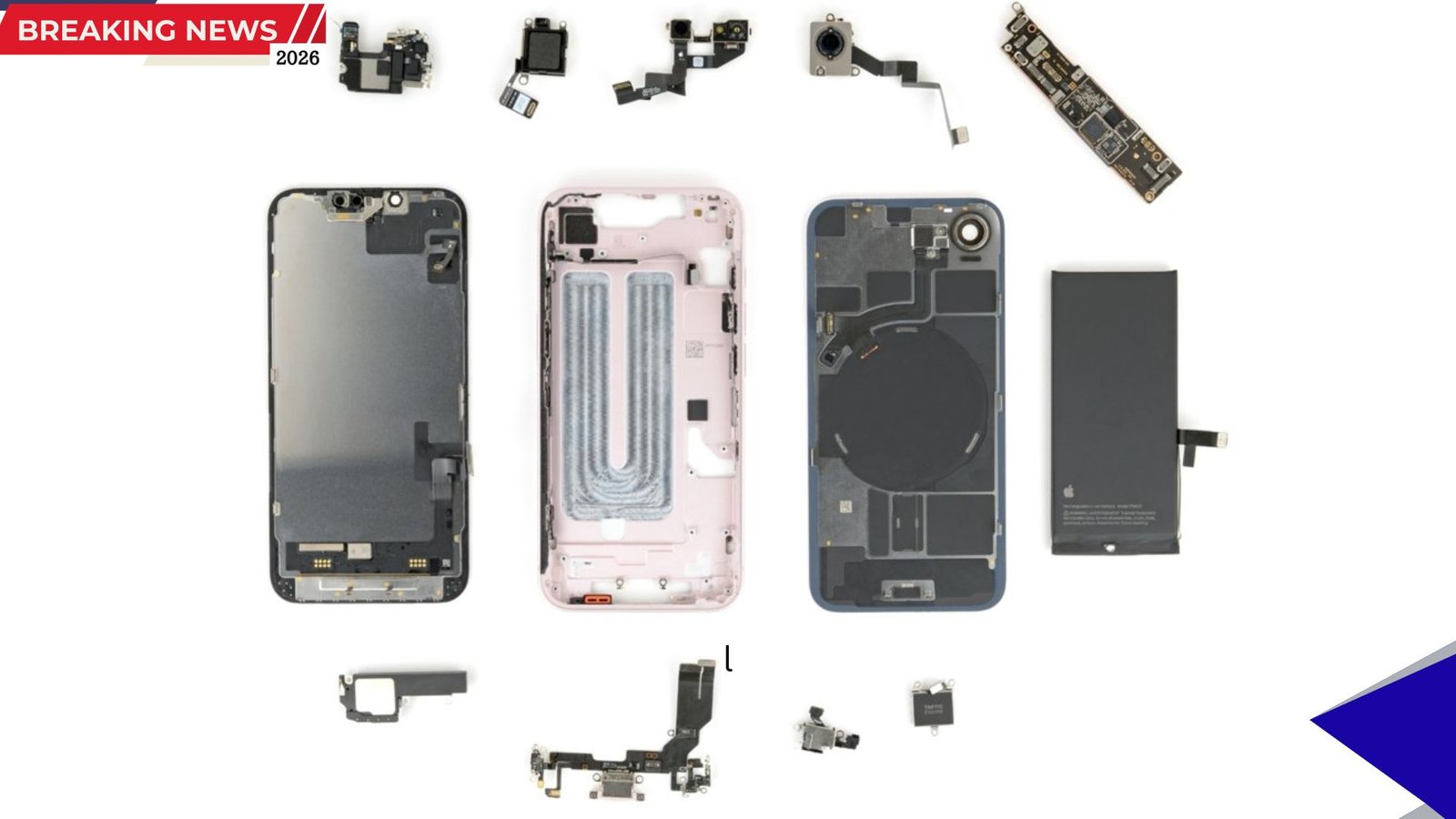
A recent teardown of the iPhone 17e has revealed that Apple’s latest entry-level model shares a highly similar internal design with its predecessor, the iPhone 16e. According to repair specialists who disassembled the device, many components between the two smartphones are interchangeable, making repairs and part replacements easier than expected.
The teardown highlights Apple’s continued focus on modular construction and repair accessibility, even though the overall design changes in the new model remain relatively limited.
Internal Design Shows Close Similarity to Previous Model
The teardown process showed that the iPhone 17e maintains an almost identical internal layout to the earlier model. Technicians began the disassembly by heating the rear glass panel to loosen adhesive. Once removed, a single press connector had to be disconnected to fully separate the back glass assembly.
This connector manages power supply for both wireless charging functionality and the rear flash unit integrated into the glass. The device also continues to use electrically releasing adhesive for battery removal, which simplifies replacement compared to older designs.
While several screws were positioned at challenging angles, most internal components were removed using standard procedures, indicating a familiar teardown process for repair technicians.
New Processor and Updated Modem Bring Key Hardware Changes
Despite the design similarities, the iPhone 17e introduces a few important hardware upgrades. The device features Apple’s new A19 system-on-chip, replacing the A18 processor used in the iPhone 16e. This updated chipset is expected to deliver improved performance and efficiency for everyday tasks and applications.
Another notable addition is the new C1X modem. Apple claims this modem provides better power efficiency while offering data speeds up to twice as fast as the previous generation. These upgrades represent some of the most significant internal changes in the new model.
MagSafe Support Added Through Updated Rear Glass Assembly
One of the visible enhancements in the iPhone 17e teardown is the inclusion of MagSafe support through a redesigned rear glass component. This part contains the wiring and magnetic charging ring compatible with Qi2 wireless charging standards.
Interestingly, testers found that the MagSafe-equipped rear glass from the newer phone could be installed in the older iPhone 16e. Although the older device lacks software recognition for MagSafe animations, wireless charging functionality still worked during testing.
Further analysis is expected to determine whether charging speeds remain consistent when such component swaps are performed.
High Level of Parts Interchangeability Observed
Repair experts were particularly encouraged by the level of cross-compatibility between the two models. In many cases, components such as logic boards and internal modules could be transferred between devices without causing major functionality issues.
When swapped parts were installed, Apple’s Repair Assistant system was able to configure most components successfully. This suggests that the iPhone 17e teardown results point toward improved repair flexibility for technicians and independent repair services.
However, there was one important limitation. The TrueDepth front camera module, responsible for enabling Face ID, did not retain full functionality after component swapping. While the camera itself remained usable, biometric authentication features could not be activated in such configurations.
Repairability Score Matches Previous Generation
Overall, the iPhone 17e received a repairability score of 7 out of 10. This rating is identical to that of the iPhone 16e, indicating that Apple has maintained similar repair standards between the two generations.
Teardown specialists noted that while Apple had improved accessibility to certain components in earlier flagship models, some design limitations remain in the e-series lineup. For example, the USB-C port is still embedded within the logic board assembly, which can make certain repairs more complex.
Key Teardown Highlights of iPhone 17e
| Feature Area | Key Findings |
|---|---|
| Processor | New A19 chip replaces A18 |
| Modem | C1X modem with improved efficiency and speed |
| Charging | Qi2-compatible MagSafe ring added |
| Battery Removal | Electrically releasing adhesive |
| Parts Compatibility | Most components interchangeable with iPhone 16e |
| Face ID | TrueDepth module not fully transferable |
| Repairability Score | 7 out of 10 |
What This Means for Users and Repair Services
The teardown findings suggest that the iPhone 17e teardown demonstrates a practical approach to device repair and maintenance. High parts compatibility can help reduce repair costs and extend device lifespan, particularly for users relying on independent service providers.
At the same time, limitations related to certain integrated components show that design challenges still exist. Balancing performance upgrades with improved serviceability remains an ongoing focus for smartphone manufacturers.
Conclusion
The teardown of the iPhone 17e confirms that Apple’s latest model builds upon the foundation of the previous generation with modest but meaningful hardware upgrades. While internal design similarities allow for extensive parts interchangeability, improvements such as the new processor, modem, and MagSafe support help differentiate the newer device.
This development is significant because it highlights how incremental design strategies can enhance repair convenience while maintaining performance improvements. For readers and potential buyers, the key takeaway is that the iPhone 17e teardown points toward better repair flexibility without major structural redesign.
As smartphone users continue to prioritize longevity and serviceability, such teardown insights are likely to influence purchasing decisions and expectations for future device updates.