
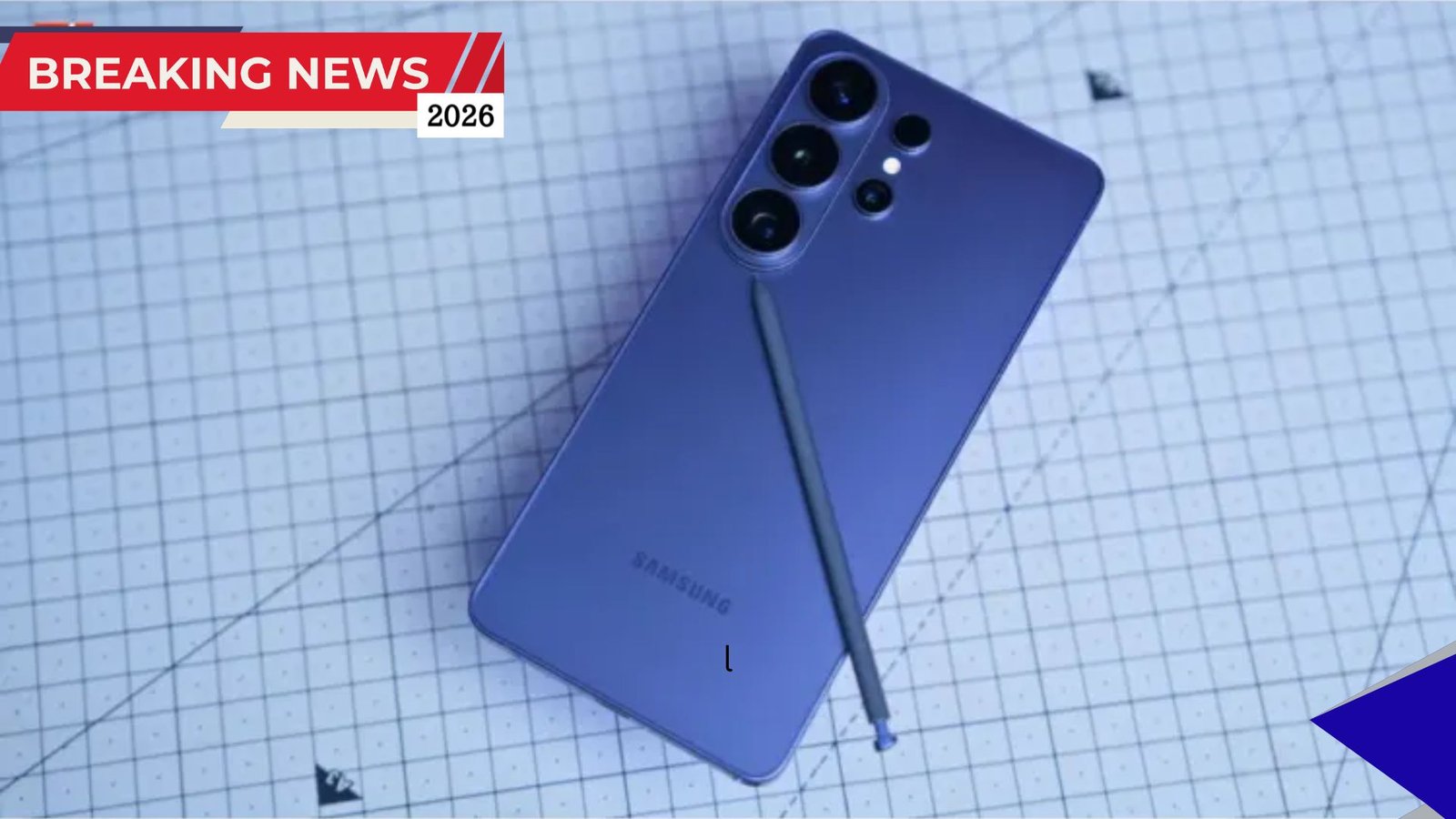
The Samsung Galaxy S26 Ultra arrives as a premium flagship that focuses more on refinement than dramatic reinvention. While early reactions have been mixed due to limited hardware changes, extended usage reveals meaningful improvements in comfort, software intelligence, and imaging performance.
Priced at around ₹1,39,999, the smartphone sits slightly above its predecessor’s launch price. Rather than introducing radical upgrades, Samsung has emphasized subtle enhancements such as improved AI features, a new Privacy Display mode, and faster charging capabilities. This approach positions the device as a polished evolution of the Ultra series rather than a complete redesign.
Familiar Design With Small Comfort Improvements
At first glance, the design of the Samsung Galaxy S26 Ultra remains instantly recognizable. The device continues to feature an expansive display, prominent camera rings, and the boxy silhouette that has defined recent Ultra models.
However, small refinements contribute to better ergonomics. The corners are now slightly rounded, making the phone more comfortable to hold during long viewing sessions or landscape gaming. The updated camera layout places lenses on a raised island, creating a more structured appearance.
Despite these improvements, the camera bump causes noticeable wobbling when the device is placed on flat surfaces. Samsung has also returned to using Armor Aluminium instead of titanium, although the build still feels sturdy and premium. With IP68 water and dust resistance included, durability remains a strong point of the device.
Display Experience Enhanced by Privacy Technology
On paper, the display specifications appear similar to earlier models. The smartphone retains a 6.9-inch AMOLED panel with a 120Hz refresh rate and QHD+ resolution. Brightness levels remain strong, and the anti-reflective coating ensures good outdoor visibility.
The key innovation comes from the new Privacy Display feature. When activated, the screen looks normal from a direct viewing angle but fades when viewed from the side. This functionality helps protect sensitive information in public settings such as cafés or public transport.
The feature works by using different types of sub-pixels that control light direction. Although the display may appear slightly dimmer when Privacy Display is fully enabled, users can automate it for specific applications such as banking or password entry. This makes the feature practical without affecting daily usage significantly.
Stereo speakers continue to deliver loud and clear sound, enhancing video streaming and gaming experiences.
S Pen: Powerful but Increasingly Specialized
The integrated S Pen remains a defining feature of the premium Android flagship, although its role has become more specialized. While still offering excellent writing accuracy and low latency, many users may find themselves using it only occasionally.
Tasks such as note-taking, document signing, sketching, and precise editing continue to benefit from stylus input. However, the absence of Bluetooth-based remote controls for the second consecutive year reduces versatility compared to earlier generations.
A slight physical change makes the S Pen around 0.8mm thinner, improving portability but making extended writing sessions slightly less comfortable.
Camera System: Intelligent Improvements Without Major Hardware Changes
The camera setup largely mirrors the previous generation, featuring a 200MP main sensor, a 10MP 3x telephoto lens, a 50MP 5x telephoto camera, a 50MP ultra-wide sensor, and a 12MP front camera.
Although one telephoto sensor is technically smaller than before, real-world photography performance remains consistent and reliable. Improvements are most noticeable in portrait photography, where faces appear brighter and more detailed due to a wider f/1.4 aperture.
Video recording receives a more significant upgrade with the Horizon Lock feature. This stabilization system keeps footage level even when the device is tilted or rotated. Users can record 4K videos with improved stability, producing smoother results during movement.
Low-light video quality also benefits from updated processing algorithms, delivering brighter and cleaner footage with reduced noise.
Flagship Performance With AI-Focused Processing
Performance on the Samsung Galaxy S26 Ultra meets expectations for a 2026 flagship. The device runs on the Snapdragon 8 Elite Gen 5 for Galaxy processor, offering faster CPU and GPU performance along with improved energy efficiency.
The base configuration includes 12GB RAM and 256GB storage, which proves sufficient for multitasking and demanding applications. A 16GB variant is available in higher storage configurations.
AI processing capabilities receive a significant boost, with the neural processing unit delivering noticeable improvements in on-device features such as image enhancement and contextual assistance. Benchmark results show strong multi-core performance compared to competing flagship devices.
Thermal management has also been improved through a larger vapor chamber and updated materials, helping maintain stable performance during extended gaming or editing sessions.
Software Experience and Expanding AI Ecosystem
Running on One UI 8.5 based on Android 16, the smartphone offers a refined and customizable user interface. Samsung continues to enhance usability through software updates and visual refinements.
Galaxy AI features play a central role in the overall experience. Tools such as Now Nudge provide timely reminders based on user activity, while Call Screen can answer unknown calls and display live transcripts.
Now Assist acts as a contextual layer across applications, suggesting actions such as adding meetings to calendars or retrieving relevant images during conversations. Creative Studio introduces generative AI tools for producing wallpapers, stickers, and greeting cards.
Photo Assist in the gallery app allows users to edit images using text prompts, enabling features like object replacement or scene regeneration. While these tools offer creative flexibility, they also highlight the importance of responsible usage.
Samsung promises seven years of Android updates and security patches, extending software support until approximately 2033.
Battery Performance and Faster Charging
The smartphone retains a 5,000mAh battery, similar to previous Ultra models. Efficiency improvements from the new chipset help maintain reliable endurance, allowing most users to complete a full day of usage.
Charging speeds see a meaningful upgrade. Wired charging now reaches up to 60W, enabling the battery to cross 50 percent capacity within about 15 minutes. Wireless charging increases to 25W with Qi2 support, although users may require compatible cases for optimal alignment.
A quick summary of key specifications is provided below:
| Feature | Details |
|---|---|
| Display | 6.9-inch AMOLED, 120Hz |
| Processor | Snapdragon 8 Elite Gen 5 for Galaxy |
| Main Camera | 200MP sensor |
| RAM & Storage | 12GB / 256GB base |
| Battery | 5,000mAh |
| Charging | 60W wired, 25W wireless |
Conclusion
The Samsung Galaxy S26 Ultra demonstrates Samsung’s focus on refinement rather than dramatic change. With improved AI integration, enhanced video stabilization, faster charging, and subtle design adjustments, the device delivers a more polished flagship experience.
This development is important because it reflects a shift in smartphone evolution, where usability improvements and software intelligence increasingly define premium devices. While upgrades may feel incremental for users of recent Ultra models, those coming from older smartphones may find the overall package compelling.
Looking ahead, the Galaxy S26 Ultra stands as a well-rounded premium Android flagship that balances performance, camera reliability, and long-term software support. Its improvements may be subtle at first, but over time they contribute to a more refined and capable user experience.