
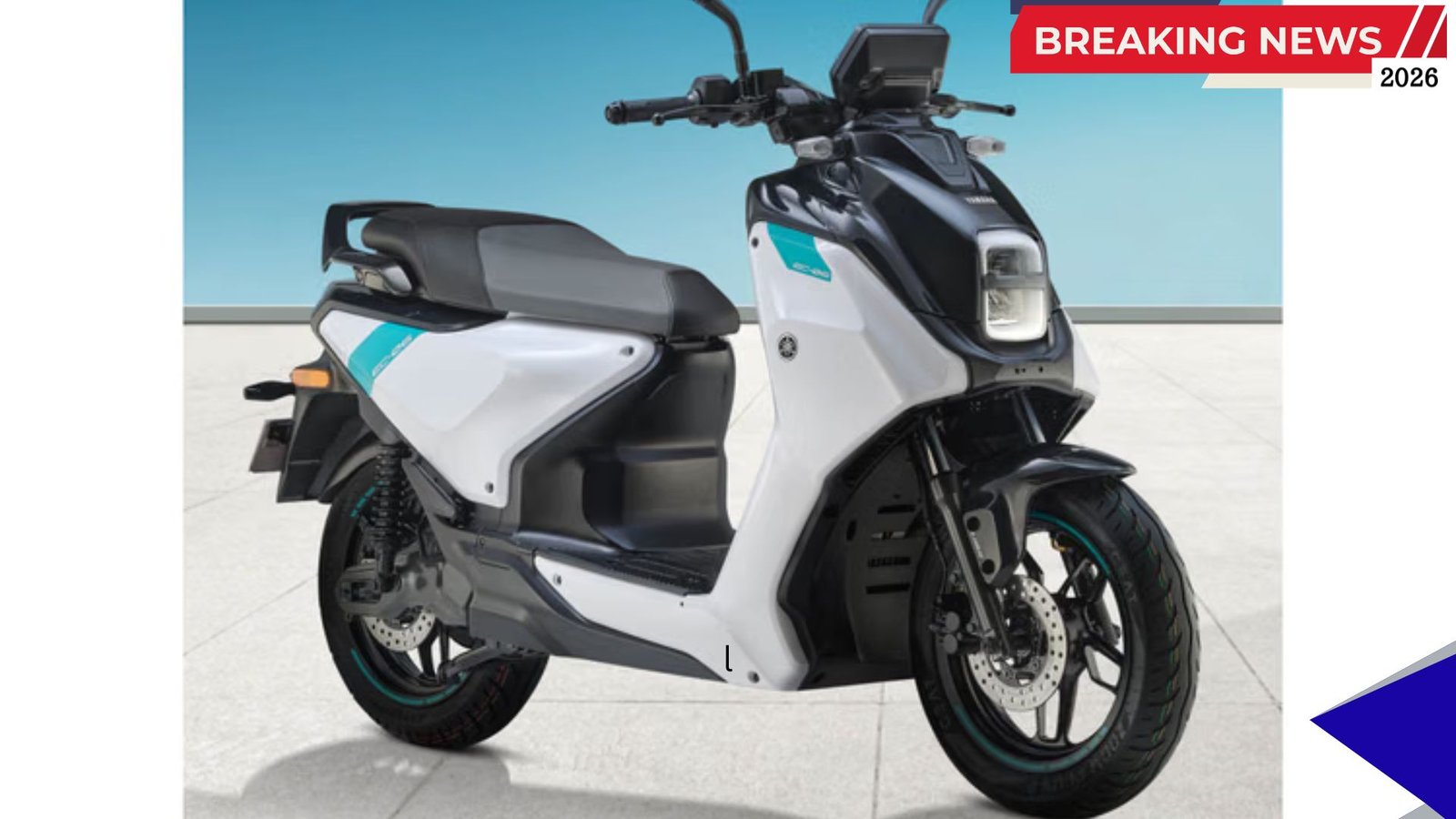
India Yamaha Motor has begun its electric journey in the country with the launch of the Yamaha EC-06. However, the initial response has been slower than expected. In its first month of sale, the company dispatched only 92 units of the scooter, highlighting the challenges faced by premium electric two-wheelers in India.
The EC-06 is priced at Rs 1,67,600 (ex-showroom) and is currently available only through Yamaha’s premium Blue Square showrooms in select cities. Despite Yamaha’s strong brand presence, the early numbers indicate a cautious start in a market that is highly price-sensitive.
Premium Pricing and Limited Availability Impact Early Sales
One of the key reasons behind the slow start of the Yamaha EC-06 is its premium pricing. At over Rs 1.6 lakh, the scooter sits significantly above many popular electric scooters in India that offer competitive features at lower prices.
The scooter is also being sold in limited cities, which further restricts its reach. Unlike mass-market electric scooters that are widely available, Yamaha has adopted a more selective retail strategy. This approach may be affecting early adoption, especially in a market where accessibility plays a major role in purchase decisions.
Joint Development with River Mobility
The EC-06 is not a standalone Yamaha project. It has been co-developed with Bengaluru-based startup River Mobility. Yamaha had invested in the company in January 2024 to strengthen its presence in India’s fast-growing electric two-wheeler segment.
While Yamaha retains ownership of the product, River Mobility is responsible for execution. This includes research and development, battery integration, engineering, and manufacturing. The scooter shares its platform with the River Indie but has several differences in design and features.
This collaboration reflects Yamaha’s strategy to combine global engineering expertise with local execution capabilities to enter the EV market effectively.
Key Features and Performance Details
The Yamaha EC-06 is designed for urban riders and comes with a balanced mix of performance and practicality. It offers multiple riding modes and connected features for a modern riding experience.
Some of the key specifications include:
- 4kWh battery pack
- Peak power of 6.7 kW (around 9 hp)
- Maximum torque of 26 Nm
- Top speed of 79 km/h
- Range of 169 km on a single charge
The scooter includes three riding modes—Eco, Standard, and Power—allowing riders to choose between efficiency and performance. It also features a Reverse Mode, which helps in easy maneuvering in tight spaces.
For suspension, the EC-06 uses telescopic front forks with hydraulic dampers and a rear coil spring setup. It also supports the Yamaha Motor Connect R app, enabling real-time data tracking and connected features.
Comparison with River Indie and Other Electric Scooters
Although based on the same platform as the River Indie, the EC-06 differs in pricing, storage, and performance aspects. It is more expensive and offers slightly different specifications.
Below is a comparison table for better clarity:
| Feature | Yamaha EC-06 | River Indie |
|---|---|---|
| Price (ex-showroom) | Rs 1,67,600 | Rs 1,45,999 |
| Battery | 4kWh | 4kWh |
| Peak Power | 6.7 kW | 6.7 kW |
| Top Speed | 79 km/h | 90 km/h |
| Range | 169 km | 163 km |
| Storage | 24.5 litres | 43 litres |
The EC-06 is priced Rs 21,601 higher than the Indie, despite offering lower top speed and smaller storage capacity. This price difference may influence buyer decisions, especially in a competitive segment.
Japanese OEMs Lag Behind Indian Players
February 2026 marked the first time all three major Japanese two-wheeler manufacturers—Yamaha, Suzuki, and Honda—were present in India’s electric scooter market. However, their combined performance has been modest.
According to industry data, total electric scooter dispatches by these companies in February stood at 824 units. In contrast, Indian manufacturers like TVS, Bajaj, and Hero MotoCorp recorded a combined 80,378 units in the same period.
Here is a quick overview:
| Company | February 2026 Dispatches |
|---|---|
| Yamaha | 92 units |
| Suzuki | 732 units |
| Honda | 0 units |
| Total (Japanese OEMs) | 824 units |
| TVS + Bajaj + Hero | 80,378 units |
This gap clearly shows that Indian companies currently dominate the electric scooter sales India segment, especially in the affordable category.
Pricing Challenges in the Premium EV Segment
The pricing strategy appears to be a major factor affecting sales of premium electric scooters. For example, Suzuki’s e-Access is priced at Rs 1,88,490, which is significantly higher than several popular models in the market.
Some competitive alternatives include:
- TVS iQube ST (5.3kWh) at around Rs 1,58,000
- Bajaj Chetak 350 at around Rs 1,23,000
- Ather Rizta Z (3.7kWh) at around Rs 1,53,000
These models offer strong value for money, making it difficult for higher-priced options like the EC-06 to gain traction quickly.
Focus on Urban Riders and Future Plans
Yamaha is clearly targeting urban riders who prefer premium products with advanced features. The EC-06 fits into this strategy, offering a refined riding experience with connected technology.
The company is also preparing to launch another electric model in India—the Aerox-E. This upcoming scooter will be the electric version of the popular Aerox 155 and is expected to strengthen Yamaha’s presence in the premium EV segment.
Additionally, Yamaha’s strong export performance indicates that these electric models may also be shipped to international markets in the future.
Conclusion
The launch of the Yamaha EC-06 marks an important step for Yamaha in India’s electric mobility journey. However, the initial dispatch of just 92 units shows that the company is facing challenges in gaining early traction.
The slow start can be linked to premium pricing, limited availability, and strong competition from more affordable options. At the same time, the overall performance of Japanese manufacturers in the electric scooter segment highlights the dominance of Indian brands.
Going forward, the success of the EC-06 will depend on how well Yamaha adapts its pricing, expands availability, and positions its products in a market that values affordability and practicality. The coming months will be crucial in determining whether Yamaha’s premium strategy can find acceptance among Indian buyers.