
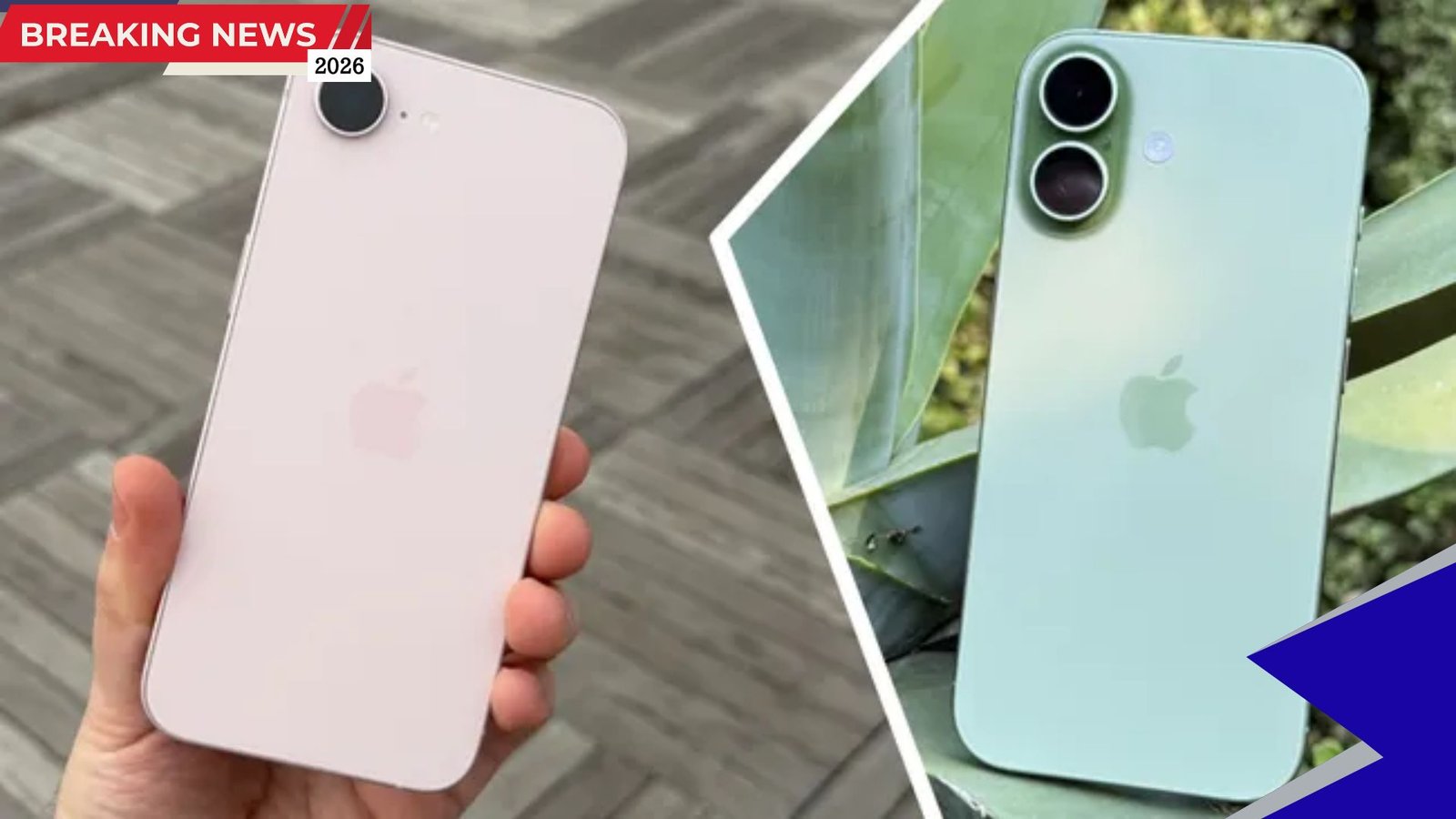
Apple has completed its latest smartphone lineup with the launch of the iPhone 17e, joining the already available iPhone 17, iPhone 17 Pro, and iPhone 17 Pro Max in global markets. These two models are positioned as the more affordable options in the series, making them important choices for buyers who want a modern iPhone without paying flagship-level prices.
While both phones share several core features, they also differ in areas such as display quality, camera capabilities, charging speeds, and overall pricing. This comparison explains the main differences between the two devices to help readers understand what each model offers.
iPhone 17e vs iPhone 17 Specifications Overview
Before looking at individual features, here is a quick comparison of the major specifications of both smartphones.
| Feature | iPhone 17e | iPhone 17 |
|---|---|---|
| Dimensions | 146.7 x 71.5 x 7.8mm | 149.6 x 71.5 x 8mm |
| Weight | 169g | 177g |
| Display | 6.1-inch OLED | 6.3-inch OLED |
| Refresh Rate | 60Hz | 120Hz |
| Peak Brightness | 1,200 nits | 3,000 nits |
| Chipset | A19 | A19 |
| RAM | 8GB | 8GB |
| Rear Camera | 48MP wide | 48MP wide + 48MP ultra-wide |
| Front Camera | 12MP | 18MP |
| Battery (Unofficial) | 4,005mAh | 3,692mAh |
| Charging | 20W wired, 15W wireless | 40W wired, 25W wireless, reverse wired |
| Storage Options | 256GB, 512GB | 256GB, 512GB |
Both models offer similar performance specifications, but their differences become clearer when examining pricing, design, camera systems, and display technology.
Price and Availability Details
The iPhone 17e was released globally in March 2026, while the iPhone 17 first became available in September 2025. Apple has positioned the newer 17e as a more affordable entry point into its ecosystem.
The pricing gap between the two phones remains consistent across storage configurations. The iPhone 17e costs $599 for the 256GB model and $799 for the 512GB version. In comparison, the iPhone 17 is priced at $799 and $999 for the same storage options.
This means the iPhone 17e is around $200 cheaper than the iPhone 17 regardless of which storage version buyers choose. Another notable change is that both devices now start with 256GB storage, offering more base capacity than their predecessors, which shipped with 128GB as standard.
Design and Build Quality Comparison
In terms of design, both smartphones look quite similar at first glance. They feature aluminum frames and use Ceramic Shield 2 protection on their displays. Both devices also carry an IP68 rating, meaning they are designed to resist dust and water under certain conditions.
Apple has included the customizable Action Button on both models, a feature that was previously limited to premium iPhones. This allows users to quickly access shortcuts or functions through a single press.
However, there are some noticeable differences. The iPhone 17 has a slightly larger 6.3-inch display compared to the 6.1-inch panel on the iPhone 17e. Despite this, both devices feel similar in hand due to the thicker bezels on the 17e. The standard iPhone 17 also features Apple’s Dynamic Island design, while the iPhone 17e continues to use a traditional display notch.
Color options vary between the two models. Both are available in black and white. The iPhone 17e also comes in pink, whereas the iPhone 17 offers additional shades such as blue, green, and lavender.
Display Experience and Brightness Differences
Display technology is one of the most important differences between these two phones. Both screens offer sharp visuals with similar pixel density, but the iPhone 17 provides a more advanced viewing experience.
It features a 120Hz refresh rate and an always-on display capability, which makes scrolling smoother and improves responsiveness in daily use. The iPhone 17e, on the other hand, is limited to a 60Hz refresh rate. While this still delivers a familiar experience for users coming from older iPhones, it does not match the fluidity offered by the higher refresh rate.
Brightness is another major gap. The iPhone 17 can reach up to 3,000 nits of peak brightness, compared to 1,200 nits on the iPhone 17e. In typical everyday use, both devices remain readable outdoors, but the standard model offers greater visibility in bright conditions.
Camera Features and Photography Capabilities
Camera performance is one of the most visible differences between the two devices. The iPhone 17 includes an additional 48MP ultra-wide camera lens, allowing users to capture wider scenes such as landscapes or tall buildings.
The iPhone 17e still uses the same 48MP Fusion main camera found across the iPhone 17 lineup. This camera supports 1x and 2x shooting with pixel-binning technology that helps maintain image quality when zooming slightly. However, users who need more zoom flexibility or additional framing options may notice the absence of the ultra-wide lens.
Both phones support next-generation Portrait Mode, which can automatically detect depth and let users adjust focus even after taking a photo. However, some advanced features such as spatial photo capture and Dolby Vision video recording are only available on the iPhone 17.
The difference continues with front cameras. The iPhone 17 offers an 18MP Center Stage camera capable of adjusting orientation to fit more people into the frame. The iPhone 17e includes a simpler 12MP front-facing camera.
Performance, Software, and Long-Term Support
Performance levels are very similar between the two smartphones. Both are powered by Apple’s A19 chipset and come with 8GB of RAM. The iPhone 17 has one extra GPU core, but overall day-to-day performance remains fast and responsive on both devices.
Users upgrading from older smartphones are likely to notice a significant improvement in speed and multitasking ability regardless of which model they choose.
Both phones run iOS 26 out of the box and support Apple Intelligence features. They also include the customizable Action Button and are expected to receive between five and seven years of major iOS updates. This long software support window ensures both devices will remain usable for many years.
Battery Life and Charging Speeds
Battery endurance is quite similar between the two models due to their shared chipset and modem technology. Apple rates the iPhone 17e for up to 26 hours of video playback and the iPhone 17 for up to 30 hours. In real usage, both phones are capable of lasting a full day on a single charge.
Charging performance, however, shows a clearer difference. The iPhone 17 supports faster charging speeds across the board, including 40W wired, 25W wireless, and reverse wired charging. The iPhone 17e offers slower speeds of 20W wired and 15W wireless charging.
In practical terms, the iPhone 17 can reach around 50 percent charge in roughly 20 minutes, while the iPhone 17e may take about 30 minutes under optimal conditions. Both devices support MagSafe accessories, which is a notable improvement for the newer budget-focused model.
Conclusion: What Buyers Should Understand
The launch of the iPhone 17e has given buyers another affordable way to enter Apple’s latest smartphone lineup. It offers strong performance, long software support, and modern features at a lower price than the iPhone 17.
At the same time, the standard iPhone 17 provides clear advantages in display quality, camera flexibility, brightness, and charging speed. These differences explain the consistent price gap between the two devices.
For readers and potential buyers, the key takeaway is that both smartphones deliver reliable everyday performance, but the choice depends on whether advanced display features and additional camera capabilities are worth paying extra for.