
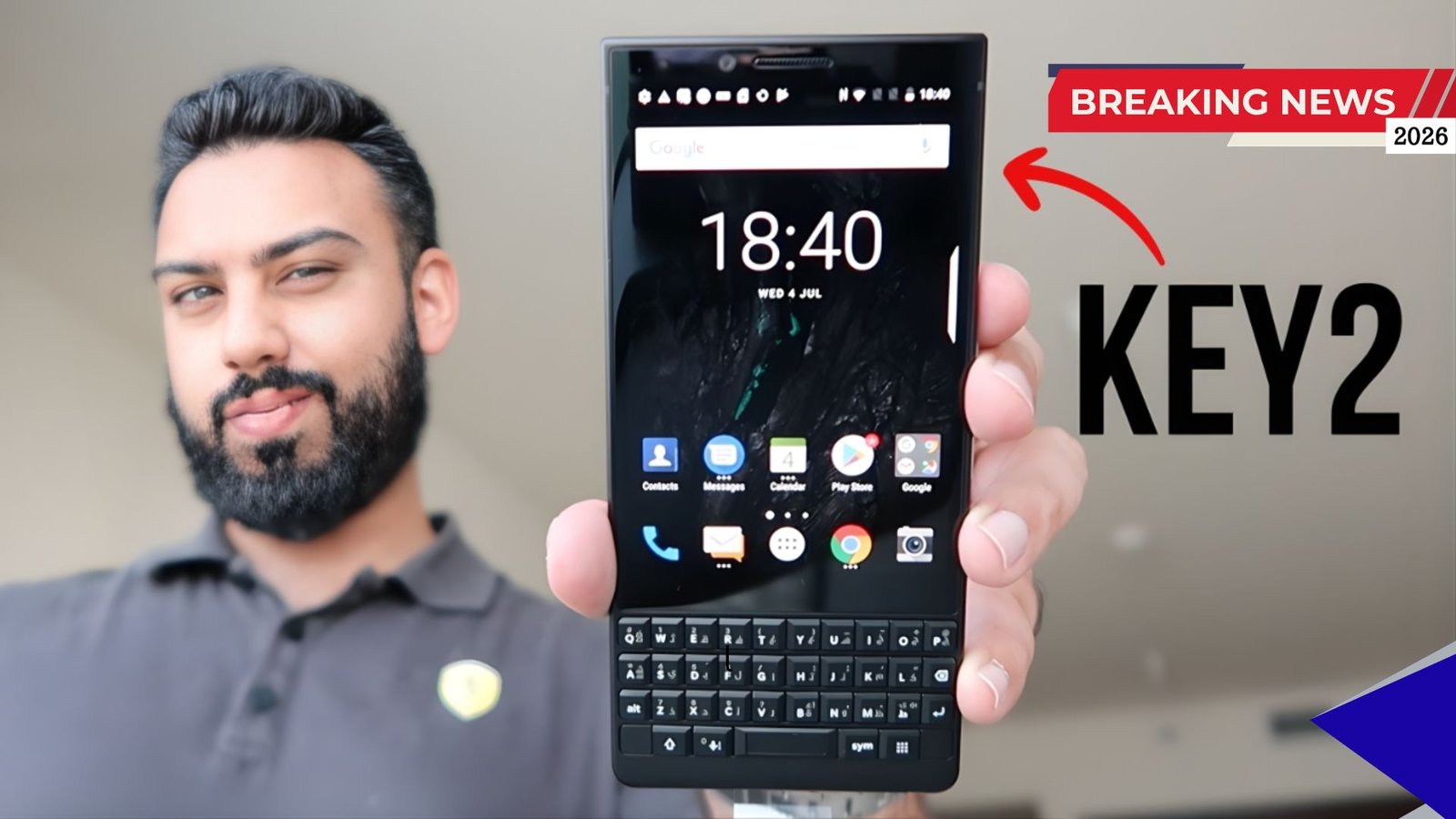
The BlackBerry Key2 continues to attract attention even years after its original launch in 2018. In March 2026, technology enthusiasts and everyday users are still exploring ways to keep this unique smartphone in use through custom software updates and practical testing.
Known for its physical keyboard and compact design, the device has developed a loyal following among users who prefer productivity-focused smartphones. While modern flagship devices dominate the market, this classic model maintains relevance due to its durable build, dependable performance, and community-driven updates.
Sleek Design That Still Feels Premium
One of the most distinctive aspects of the BlackBerry Key2 is its timeless design. The smartphone features a sleek aluminum frame combined with a traditional QWERTY keyboard, setting it apart from touchscreen-only devices.
With a 4.5-inch display offering a resolution of 1080×1620 pixels, the device remains compact and easy to handle. Its size allows users to carry it comfortably in pockets or small bags without feeling bulky.
The backlit keyboard enhances usability in low-light environments. Additionally, the spacebar doubles as a fingerprint scanner, allowing quick and secure unlocking. Users also appreciate the capacitive keyboard functionality, which enables scrolling gestures while typing.
Customizable shortcut keys further improve efficiency by allowing quick access to apps and functions. This hybrid design continues to combine nostalgia with modern productivity, keeping the Snapdragon 660 smartphone appealing to those who prefer physical input methods.
Performance That Still Handles Everyday Tasks
Under the hood, the BlackBerry Key2 is powered by the Snapdragon 660 chipset paired with 6GB of RAM. At the time of its release, this hardware configuration was known for strong multitasking capabilities and reliable performance.
In 2026, benchmark tests indicate that the device can still manage essential tasks such as web browsing, email communication, and navigation. However, heavy gaming or resource-intensive applications may feel slower compared to newer smartphones.
The device’s 3500mAh battery remains one of its strengths. Users often report that it can last a full day with mixed usage, including messaging, browsing, and GPS navigation. This endurance makes it suitable for travelers and professionals who require dependable battery life throughout the day.
Reliable GPS performance also supports navigation apps like Google Maps, making the device useful for daily commuting or long journeys.
App Compatibility Brings Mixed Results
The BlackBerry Key2 runs on stock Android 8.1 Oreo, which creates both advantages and limitations in 2026. Many core Google services continue to function smoothly, allowing users to access Gmail, browse websites through Chrome, and stream videos on YouTube.
Messaging applications such as Telegram and WhatsApp remain usable, while platforms like Beeper help bridge compatibility gaps with other communication tools. Some banking apps also continue to work effectively for basic transactions.
However, several modern applications have dropped support for Android 8.1. Services like LinkedIn, Microsoft Teams, and certain note-taking apps may show glitches or fail to run entirely.
The smartphone includes a dual 12MP camera setup capable of capturing portraits and recording 4K video. While the camera performs adequately in good lighting conditions, low-light images may appear grainy compared to today’s smartphone standards.
Custom ROMs Extend Device Lifespan
A major reason behind the continued relevance of the BlackBerry Key2 in 2026 is the growing interest in custom software solutions. Developers have focused on unlocking the device’s bootloader and porting newer operating systems to extend usability.
In late 2024, developers associated with Aiterium-X reportedly achieved a bootloader unlock, enabling installation of unofficial software builds without hardware modifications. By early 2026, unofficial LineageOS 22.2 builds based on Android 15 began appearing for both the Key2 and Key2 LE variants.
These custom ROMs help restore essential functions such as Wi-Fi connectivity, Bluetooth performance, camera operation, mobile network services, and keyboard integration. Developers have also addressed issues related to crashes and modem stability.
Although some limitations remain, including disabled SELinux and encryption features, community-driven updates continue to improve device performance and security support.
Minimalist Appeal for Modern Users
The BlackBerry Key2 has found renewed popularity among users seeking distraction-free technology. Content creators and minimalist tech enthusiasts often describe it as a focused productivity tool rather than a feature-heavy smartphone.
Its physical keyboard encourages efficient typing, while the absence of excessive notifications and advanced AI features helps users maintain better concentration. Travelers and remote workers also appreciate its durable construction and dependable battery life.
The presence of a headphone jack remains another advantage for users who prefer wired audio solutions. Even after repeated use or accidental drops, many users report that the device retains its structural integrity.
This combination of durability, simplicity, and functionality continues to attract interest in the Snapdragon 660 smartphone category, especially among those who prioritize usability over cutting-edge specifications.
Key Specifications at a Glance
The main hardware and feature highlights of the BlackBerry Key2 are summarized below for quick reference:
| Feature | Details |
|---|---|
| Processor | Snapdragon 660 |
| RAM | 6GB |
| Display | 4.5-inch, 1080×1620 resolution |
| Battery | 3500mAh |
| Keyboard | Physical QWERTY with backlight |
| Camera | Dual 12MP setup |
| Operating System | Android 8.1 Oreo (Stock) |
These specifications reflect the device’s original positioning as a productivity-focused smartphone with reliable everyday performance.
Conclusion
The continued interest in the BlackBerry Key2 highlights how durable hardware and unique design can extend a device’s relevance beyond its original lifecycle. Through community support, custom ROM development, and practical usability, the smartphone remains functional for basic tasks even in 2026.
This situation matters because it shows that not all users prioritize the latest technology. For some, reliability, simplicity, and physical input options remain more important than high-end specifications.
Going forward, the Key2 may continue to find a niche audience among enthusiasts and minimalists who value focused productivity. While modern smartphones offer faster performance and broader app compatibility, the legacy of this keyboard-equipped device demonstrates how thoughtful design can maintain long-term appeal.